
How to Find Northampton County Arrest Records
A recent arrest leaves two trails. The first is the jail booking record, held by the Northampton County Department of Corrections. The second is the court docket, which opens once a citation or complaint is filed. For a fresh arrest, start with the jail by phone. Central Booking answers at 610-923-4300, and Records answers at 610-923-4303. Have the full name, date of birth, the rough arrest date, and the arresting agency ready.
The county does not run a public online arrest blotter. So the most reliable public record of an arrest is the charging document and docket on the statewide portal. Use the Pennsylvania UJS Case Search and set the county to Northampton. Search by name, OTN, or complaint number.
Note: A fresh arrest can sit in the jail before a full public docket appears, so confirm booking status by phone while the case record catches up.
Northampton County Booking and Jail Records
Booking is a custody step, not a court step. At intake, staff record identity, charges, fingerprints and photos, property, and a medical screening, then set classification and housing. A magisterial district judge handles the preliminary arraignment and sets bail. Much of the jail file stays private. Housing, classification, medical, and disciplinary details are not public, even when the court docket is.
What you can usually confirm by phone is limited to custody status and basic case facts. For the deeper jail picture, including visitation and accounts, the Northampton County inmate records page lays out the contacts and steps. The county jail sits at 666 Walnut Street in Easton, a short distance from the courthouse.
What Northampton County Arrest Records Show
The jail and the court track different things, and the public can see only part of each. A booking record holds custody facts. A court docket holds case facts. Once a case is filed, the docket fills in the charges, events, and outcome that an early arrest record cannot. The table below shows the kind of fields tied to a Northampton County arrest as the case moves from booking to court.
| Field | What It Shows |
|---|---|
| Name and date of birth | Identity of the person booked or charged. |
| Arrest date | When the person was taken into custody. |
| Arresting agency | The police department or office that made the arrest. |
| Charges | Offense, statute, and grade listed at arrest and on the docket. |
| OTN | Offense tracking number that links the arrest to the court case. |
| Bail | Bail type and amount set at preliminary arraignment. |
| Disposition | The outcome of each charge once the case is decided. |
Confidential identifiers, such as Social Security numbers and minor names, are kept out of public view under court policy. Jail housing, classification, and medical details stay private as well.
Arrest Record vs Criminal Court Record
People often use the two terms as if they mean the same thing. They do not. An arrest record starts at booking and lives with the jail and arresting agency. A criminal court record starts when charges are filed and lives with the court and the Clerk of Courts. The table below sorts out which is which.
| Feature | Arrest Record | Criminal Court Record |
|---|---|---|
| Starts at | Booking and intake | Filing of a citation or complaint |
| Held by | Jail and arresting agency | Court and Criminal Division |
| Public online | No county blotter | UJS docket sheets |
| Shows | Booking, charges at arrest, custody | Charges, events, plea, disposition, sentence |
| Get copies from | Jail Records, arresting agency | Criminal Division / Clerk of Courts |
For the full case history, the Northampton County court records page covers the docket search in depth.
Charges vs Convictions in Northampton County
An arrest means someone was charged. It does not mean they were convicted. The charge is the accusation. The conviction is the outcome after a plea or trial. On a docket, read the disposition line to see what really happened. A case can end in a guilty plea, a verdict, a dismissal, a withdrawal, or a diversion such as ARD.
| Term | What It Means |
|---|---|
| Charge | The offense a person is accused of at arrest or filing. |
| Conviction | A guilty plea or finding of guilt after the case is decided. |
| Dismissal | The charge is dropped and not pursued further. |
| ARD | Accelerated Rehabilitative Disposition, a diversion that can avoid a conviction. |
DUI cases often route through ARD for first-time offenders, and a DUI is not treated as an ordinary traffic ticket. The traffic court records page explains where DUI and DWI matters go.
Bail, Costs, and Criminal Case Steps
After charges are filed, money and deadlines enter the picture. A magisterial district judge sets bail at the preliminary arraignment. Bail can be posted at the Criminal Division during business hours, but only after contacting Pre-Trial Services first. Outside regular hours, bail is posted at the Northampton County Prison. Only cash or a certified check is accepted for bail, so plan ahead.
Criminal costs and fines run through the Criminal Division. The office charges $10 for a county Common Pleas criminal record search, plus any copy or certification fees. Payments by mail must be a business check, certified check, or money order payable to "Criminal Division," with the defendant name, date of birth, and case number if known. The office does not give disposition or sentencing details by phone. For supervision after a sentence, Adult Probation answers at 610-559-6800, and DUI Probation and ARD at 610-559-6810.
Note: Questions about hearing dates, scheduling, or restitution go to the District Attorney's Office at 610-829-6666, not the Criminal Division.
Mugshots and Arrest Photos
Booking photos are taken at intake. The county does not publish a public mugshot gallery on its official pages. Some details about a case come from the District Attorney instead, which posts court docket lists and prosecution news. Treat third-party mugshot sites with care, since they are not official and may be out of date.
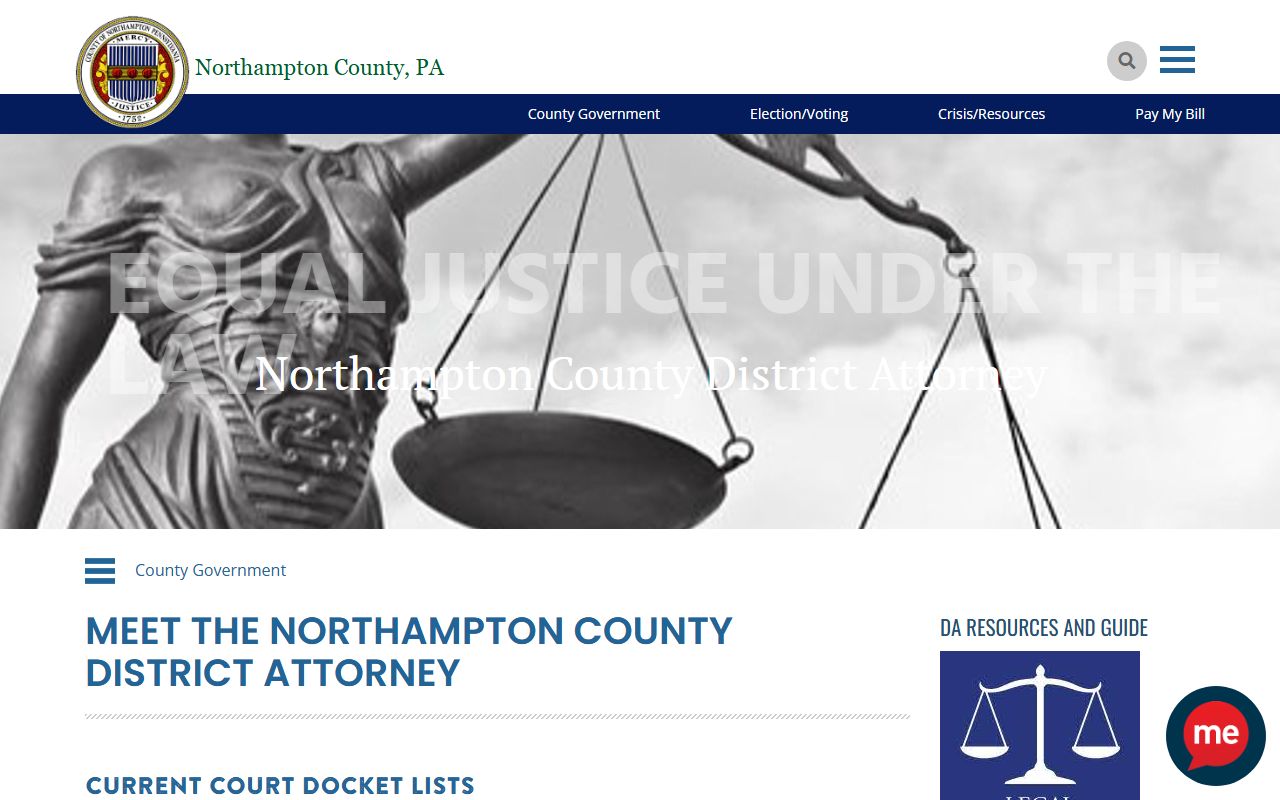
The Northampton County District Attorney page lists the arraignment list, arraignment index, and trial list, plus victim and witness services.
Criminal History Background Checks
A docket search is handy, but it is not an official background check. The UJS public records page says case information should not be used in place of a criminal-history check. Only the Pennsylvania State Police provide the official statewide criminal-history record. The way criminal history is collected and shared is set by statute.
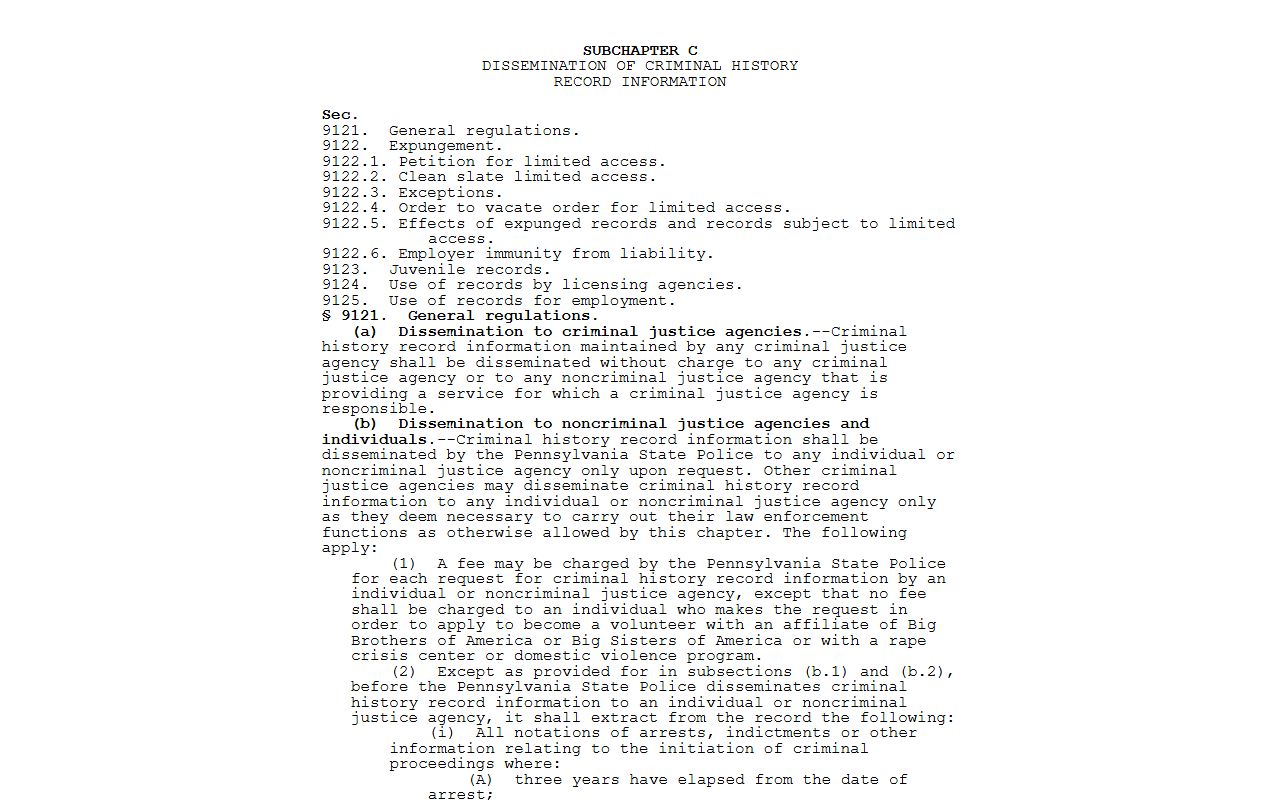
Section 18 Pa.C.S. § 9121 governs how criminal history record information is kept and released in Pennsylvania.
Dockets can also miss records that have been sealed, expunged, or marked for limited access. So a clean docket search does not always mean a clean history, and an official check fills the gap.
Expungement and Limited Access in Northampton County
Pennsylvania offers two ways to clear or hide an eligible record. Expungement removes or destroys eligible criminal history record information. Limited access seals a record from public view while keeping it open to courts, police, and certain employers. Clean Slate can apply limited access automatically once statutory conditions are met. The county court site has an expungement self-help section to start.
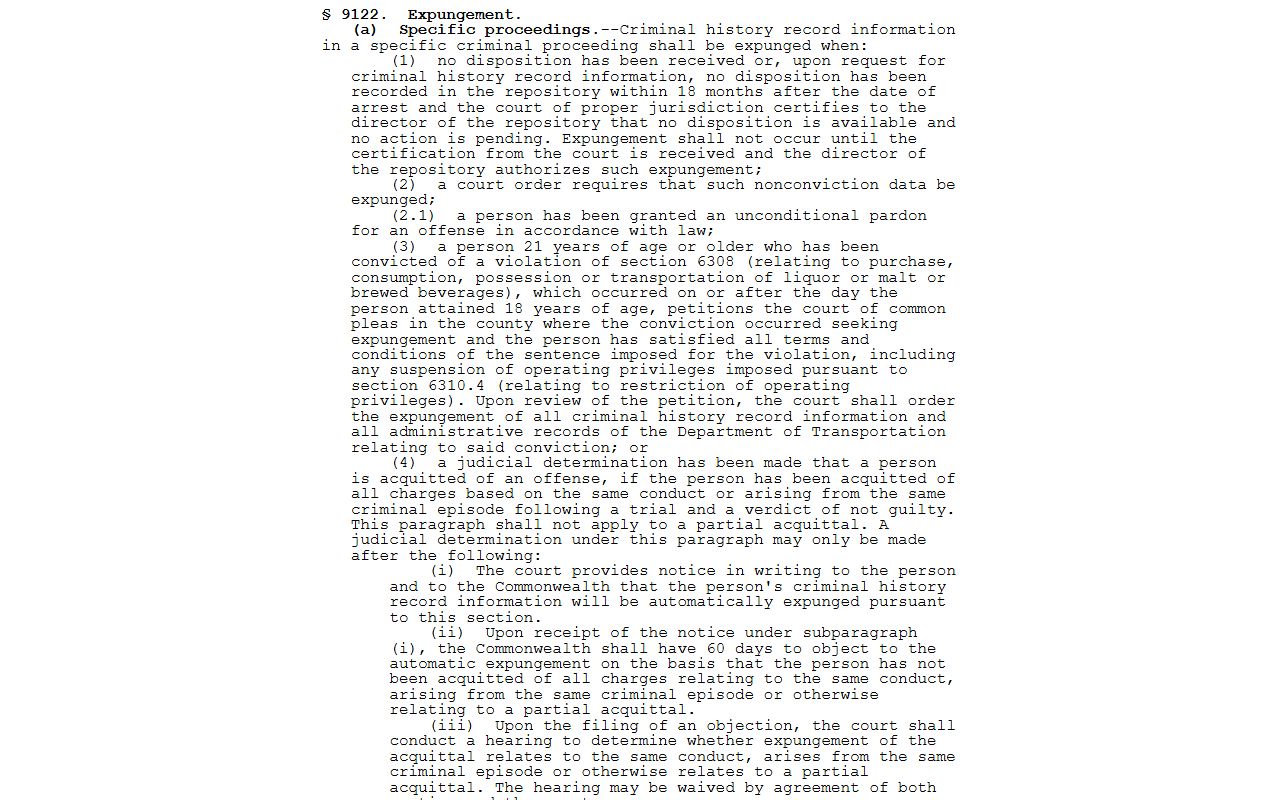
The expungement statute, 18 Pa.C.S. § 9122, sets which records may be expunged and when.
| Feature | Sealed (Limited Access) | Expunged |
|---|---|---|
| What happens | Hidden from public view | Removed or destroyed |
| Who can still see it | Courts, police, some employers | Very limited retention |
| How it happens | Petition or automatic Clean Slate | Petition under § 9122 |
| On UJS public search | Not shown | Not shown |
The practical path runs in steps. First, pull the docket and confirm the disposition. Next, check eligibility against the statute, since pending charges, unpaid costs, or a disqualifying conviction can block relief. Then file the correct petition with the court of record and serve any required agencies. If the court grants the order, it goes to the Pennsylvania State Police, the UJS, and local repositories. After that, a public search may no longer show the case even though authorized agencies keep limited information.
The Pennsylvania Sex Offender Registry
Some convictions require registration under Megan's Law. The registry is a separate public system from the court docket and the jail roster. It shows registration details for offenders living, working, or studying in an area. Appearance on the registry is not the same as current custody, and registry use is limited by law.
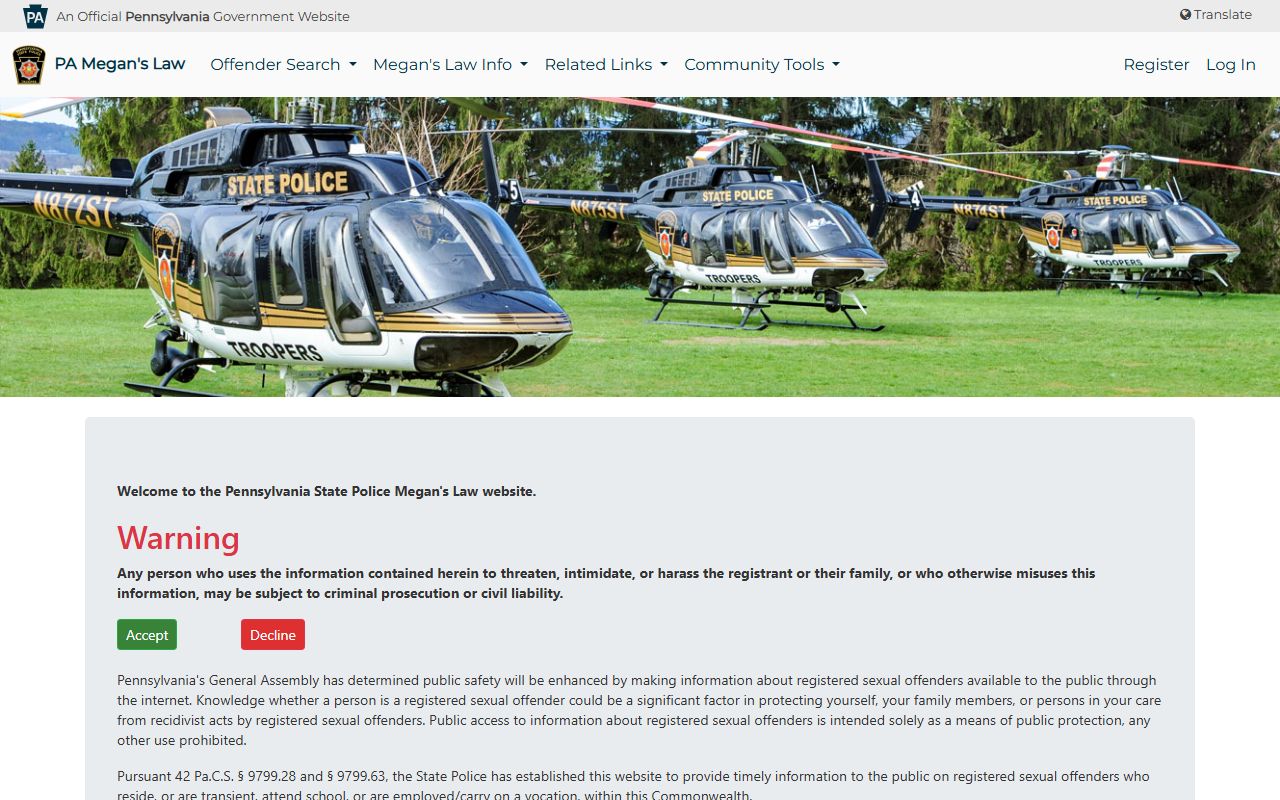
The Pennsylvania Megan's Law registry lets you search by name or location, including Northampton County communities.
District Attorney and Public Defender
Two offices shape most criminal cases. The District Attorney prosecutes and runs victim and witness services, and it handles its own open-records requests for law-enforcement matters. The Public Defender represents people who cannot afford counsel. For law-enforcement records held by the DA, the office uses a written Right-to-Know process rather than the court docket.
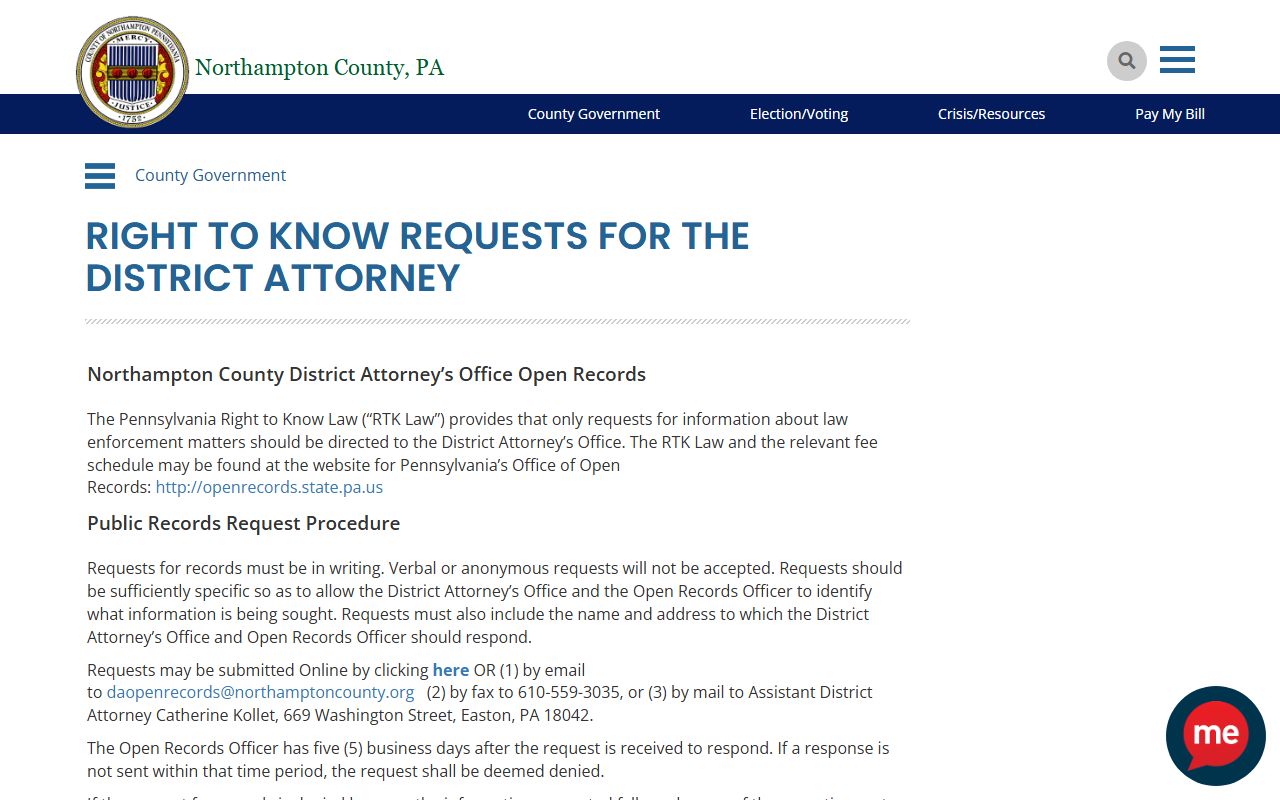
The DA Right-to-Know page explains how to request law-enforcement records by online form, email, fax, or mail.
For warrants tied to an arrest, the Northampton County warrant records page covers bench warrants and how to resolve them. Criminal record copies and the $10 search come from the Clerk of Courts. The DA also runs tip lines and 24/7 victim support, separate from the court docket, for people reporting a crime or seeking help as a victim or witness.