
No Public Warrant Portal in Northampton County
There is no official online list of open warrants for the county. A review of county sites found no public active-warrant search tool. So no page here will claim one exists. That changes how a Northampton County warrant search works. You cannot just type a name into a "warrant lookup" box and get a clean answer.
What you can do is use the records that are public. The statewide court docket system shows many warrant events on cases that are already public. A bench warrant issued in a criminal case, for example, often appears as a docket entry. From there you confirm the live status with the office that owns the case. The two best starting points are the court docket portal and a phone call to the right county office.
Be careful with private "warrant check" websites. They are not official, and they are not the county. Many pull old or wrong data and charge a fee for it. Stick to court dockets and county phone lines. Note: An outstanding warrant can lead to arrest at any time, so do not ignore one while you try to confirm it online.
The Sheriff's Criminal Division and Warrants
The Sheriff's Criminal Division is the office that serves court-issued warrants in Northampton County. Deputies in this division investigate and locate fugitives, work with other police agencies, and carry out the warrants that judges sign. The division also handles the active search for people who are wanted but have not been found.
This unit has a federal reach that many county sheriff offices do not. Its members are cross-sworn as Deputy U.S. Marshals. They take part in the U.S. Marshals Service Violent Fugitive Task Force, which goes after high-risk and violent fugitives across jurisdiction lines. That task force partnership matters for serious warrants where a person may flee the area or even the state.
The county Criminal Division page sends bench-warrant questions to the Northampton County Sheriff's Office at 610-829-6561. If you think a bench warrant is out, that phone number is the official county contact to ask about it. Have a name, a date of birth, and any case or docket number ready before you call.
You can read more about the office and its other duties on the Sheriff's own site. The lead-in below points to that official page.
The county describes its court-security, transport, and fugitive work on the Sheriff's Department page.
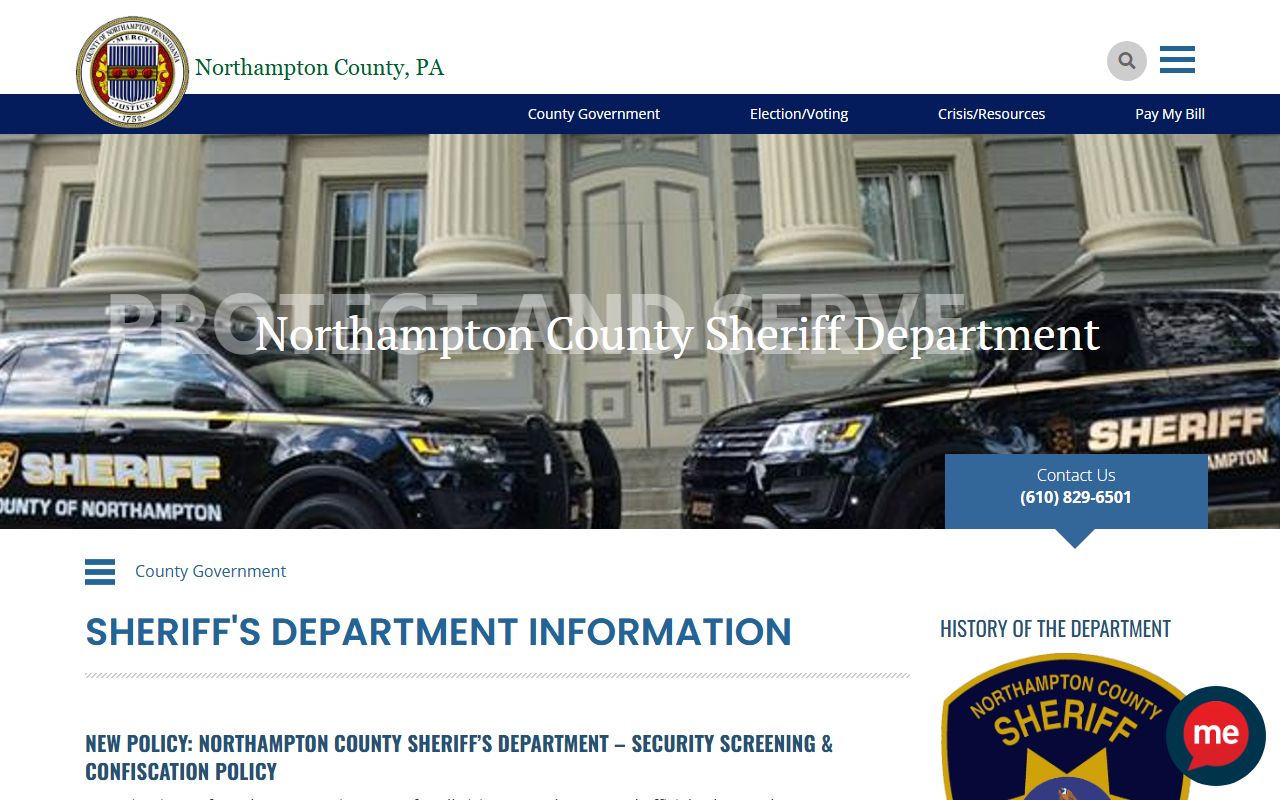
That page lays out the divisions that touch a Northampton County warrant, from courthouse security to prisoner transport and the Criminal Division that serves the warrants themselves.
Bench Warrants in Northampton County
A bench warrant is the kind most people run into. It is issued by a judge, from the bench, when something goes wrong in a case that is already open. The most common trigger is a failure to appear for a scheduled court date. Others include failure to comply with a court order, a probation or parole violation, nonpayment where the law allows it, or contempt of court.
Bench warrants in the county come from two court levels. A Magisterial District Judge can issue one in a summary, traffic, or preliminary matter at the district court level. A judge of the Court of Common Pleas issues bench warrants in felony, misdemeanor, and civil cases that have moved up. The court that issued the warrant is the court that can lift it, so the docket tells you where to go.
Bench warrant questions for the county route to the Sheriff's Office at 610-829-6561. The Sheriff serves the warrant, but the issuing court controls whether it stays open or gets withdrawn. When the warrant ties to a charge you face, talk to a lawyer before you act. The arrest records page covers how charges and bench warrants show up after a booking.
Searching UJS for Warrant Events
Public court dockets are the best free tool for a Northampton County warrant search. The Pennsylvania UJS Case Search portal posts docket sheets for public criminal Common Pleas cases and for magisterial district court matters. When a judge issues or withdraws a bench warrant on one of those cases, the docket often records it as an event with a date.
This is not a warrant list. It is a case search that may show warrant activity inside a case you already know about. So it works best when you have a name, a docket number, or a citation number to start from. Set the county to Northampton to keep statewide noise out of your results. The fields below show what the portal accepts for this kind of search.
| Field / Method | Type | Required | Notes / Format |
|---|---|---|---|
| Public active warrant portal | n/a | n/a | None located in official county sources; no public list exists. |
| Name | Phone / in-person | Yes | Call the Sheriff's Office at 610-829-6561 for bench-warrant questions. |
| Case / docket number | Phone / in-person | Optional | Helps the office identify the exact warrant. |
| Date of birth | Phone / in-person | Optional, recommended | Helps tell apart people with the same name. |
| UJS case search | Web | Optional | Dockets may show bench-warrant issued or withdrawn events on public cases. |
| Sheriff's Office phone | Phone | n/a | 610-829-6561 for bench warrants. |
If a name search returns nothing, that does not prove a person is clear. The case may be sealed, juvenile, or simply not reflected yet. Use the docket as a clue, then confirm by phone. The court dockets page explains how to read a docket sheet line by line.
Types of Northampton County Warrants
Not every warrant means the same thing. The kind of warrant shapes who issued it, what it asks for, and whether it shows up in a public search at all. Knowing the type helps you ask the right office the right question. Here are the main warrants you will hear about in the county.
- Arrest warrant
- Issued for an arrest based on a complaint and probable cause. A Magisterial District Judge signs these in most new criminal matters.
- Bench warrant
- Issued by a court for failure to appear, failure to comply, a probation or parole violation, contempt, or violation of a court order.
- Search warrant
- Authorizes police to search a property or person. These are often sealed and not publicly visible until they are returned or unsealed.
- Fugitive warrant or detainer
- Used when a person is wanted by another jurisdiction. The cross-sworn Criminal Division and the federal task force handle many of these.
- PFA-related order
- The Sheriff's Civil Division serves Protection From Abuse orders, and a violation can trigger arrest and criminal proceedings.
Civil process and PFA service sit on a different track than criminal warrants. The Sheriff's Civil Division docks each matter through the Prothonotary first, then serves the papers. You can read how that office handles service of orders, writs, and PFAs at the source linked next.
The county explains writ service, sheriff sales, and PFA handling on its Sheriff Civil Services page.
That page is the civil counterpart to warrant service, and it shows why a PFA violation can cross over into a criminal warrant.
How to Resolve a Northampton County Warrant
An open warrant does not fix itself. The right steps depend on the type and the court, but the general path is the same. Move quickly, get the facts, and use the official channels. The steps below walk through how to handle a warrant in the county from start to finish.
- Do not rely on unofficial warrant websites or paid lookup tools for the live status.
- Search the UJS portal by name or docket number to find any public bench-warrant docket entries.
- Call the Sheriff's Office at 610-829-6561, or contact the relevant district court or Criminal Division, to confirm the warrant.
- Contact a private attorney or the Public Defender if you qualify, before you appear or surrender.
- If bail is set, follow the Criminal Division or jail bail-posting instructions for payment.
- Appear at the issuing court or surrender as you are instructed by the court or your lawyer.
- After the matter is resolved, check the UJS docket to confirm the warrant shows as lifted or withdrawn and that any new court date is posted.
Acting on your own carries risk. A person with an open warrant can be taken into custody during the process. That is why legal advice up front matters, and why bail money and identification should be ready before anyone walks into the courthouse. The inmate records page covers what happens if a warrant ends in a booking and how to confirm custody.
Bail on Northampton County Warrants
Many warrants carry a bail amount, and clearing the warrant often means posting it. Magisterial District Judges set bail in the county and conduct the early criminal proceedings where bail is fixed. The amount and type appear on the public docket once the case is entered, so a UJS search can tell you what to bring.
Where and how you post bail depends on the time of day. The Criminal Division accepts bail during regular business hours, 8:30 a.m. to 4:30 p.m., not counting holidays. The county page says to contact Pre-Trial Services before you come to the Criminal Division. Outside of those hours, bail can be posted at the Northampton County Prison instead.
One rule trips people up. Only cash or a certified check is accepted for bail. No personal checks, and no cards. Bring the exact form of payment, plus identification and the docket or case number. Note: Calling Pre-Trial Services first can save a wasted trip, since staff confirm the amount and the correct place to post before you arrive.
Sealed and Juvenile Warrants in Northampton County
Some warrants will never show up in any public search, and that is by design. Search warrants are commonly sealed before they are executed or returned, so they stay out of public view until the court unseals them. The same goes for grand jury matters and certain law-enforcement investigative records, which are not public.
Juvenile cases are also closed off. The UJS help materials confirm that juvenile delinquency and dependency matters do not appear as public docket sheets, and access is limited by the Juvenile Act, court rule, and court order. Sealed cases, expunged cases, cases pending expungement, and limited-access or Clean Slate cases are likewise unavailable on the public portal.
Eligible records can be removed or sealed through state law. Expungement under 18 Pa.C.S. § 9122 can clear certain non-conviction and limited categories, while limited access seals records from public view but keeps them open to courts and police. If a warrant connects to a record you want sealed, the issuing court and the Criminal Division can explain the petition and the waiting periods that apply.
Attorney and Public Defender Help With Warrants
Facing a warrant is not something to handle blind. A lawyer can confirm the warrant, arrange a surrender, argue for lower bail, and protect your rights at the first hearing. People who cannot afford a private attorney may qualify for the county Public Defender, which is provided at no cost to those who meet the income test.
The Northampton County Public Defender represents people in misdemeanor and felony criminal cases at all stages, and that work covers warrant-related matters. The office handles preliminary hearings, pretrial motions, bail reduction requests, probation and parole violations, extradition, juvenile delinquency, and mental health commitment cases. Its office sits in the basement level of the courthouse at 669 Washington Street in Easton.
You can read who qualifies and how to apply on the office's own page. The link below points to that official source.
The county outlines case types and eligibility on the Public Defender page, and it accepts bail and criminal filings through the Criminal Division.
For a fugitive warrant from another jurisdiction, the federal side may get involved through the U.S. Marshals task force. Federal prosecution in this region runs through the U.S. Attorney's office. The lead-in below links that office.
Federal cases tied to a fugitive warrant are prosecuted through the U.S. Attorney, Eastern District of Pennsylvania.
That office handles the federal end when a Northampton County warrant crosses into the Violent Fugitive Task Force or a federal charge.
Warrant Record Fields on a Public Docket
When a warrant event appears on a public docket, it comes with a set of fields. These tell you what the warrant is, when it was issued, and whether it has been served or lifted. The Sheriff's internal service notes are usually not shown in full public detail, but the case-level fields below give you the picture you need.
| Field | What It Shows |
|---|---|
| Docket Number | The court-coded case number tied to the warrant. |
| Issuing Court / Judge | The Common Pleas judge or Magisterial District Judge who signed it. |
| Warrant Type | Arrest, bench, search, or fugitive, shown as an event entry. |
| Issue Date | The date the court issued the warrant. |
| Defendant Name | The person named on the warrant, with confidential identifiers redacted. |
| Charges | The offense, statute, and case type behind the warrant. |
| Bail Status | The bail type and amount when bail applies. |
| Warrant Lifted / Served Date | When the warrant was served, withdrawn, or lifted. |
| Next Court Event | The next scheduled hearing or appearance. |
Read the lifted or withdrawn line before you assume a warrant is still open. A docket that shows the warrant served or withdrawn means the court has already acted. For full case history beyond the warrant event, the court records page walks through the rest of the docket sheet.