
Orphans' Court vs Probate in Northampton County
Most states call this office a probate court. Pennsylvania does not. Northampton County splits the work between two named offices that handle the same kind of cases. The Register of Wills is the filing office for wills and decedent estates. The Orphans' Court is the court division that hears estate disputes, audits accounts, and rules on guardianship, incapacity, and adoption. They share a building and staff, and for most families the two work as one stop.
If you are used to the word "probate," it still fits here. Probate just means proving a will and opening an estate. In Northampton County that proof happens at the Register of Wills counter. The Orphans' Court steps in only when a case needs a judge, such as a fight over an account, a minor's guardianship, or an adoption. Estate and probate records, then, can live on either the Register side or the court side, depending on what stage the case is in.
Knowing which side holds a file saves time. Wills, letters, and inheritance tax sit with the Register. Audited accounts, distributions, escrow accounts, and confidential family matters sit with the Orphans' Court. A call to the office settles any doubt before you make a trip.
Register of Wills Duties in Northampton County
The Register of Wills is the gateway for every Northampton County estate. When someone dies with a will, the original goes here to be proved. The Register reviews it, opens the estate, and issues letters that name the person who will settle the estate. The office also takes in the Pennsylvania inheritance tax and the filing fees that fund county operations.
Patricia Manento serves as the Register of Wills and Orphans' Court. The office sits inside the Government Center in Easton and is reachable by phone for both probate and marriage questions. Staff cannot give legal advice, but they will tell you what forms a filing needs and what each step costs.
Register of Wills and Orphans' Court
Patricia Manento, Register of Wills and Orphans' Court
Northampton County Government Center
669 Washington Street
Easton, PA 18042
Register: 610-829-6492
Probate questions: 610-829-6487 or 610-829-6486
Marriage information: 610-829-6988
Email: Probates@northamptoncounty.org
The office handles much more than wills. It records estate filings, tracks letters testamentary and letters of administration, and manages inheritance tax returns. Contact details and request steps are posted on the county Register of Wills and Orphans' Court page and the Wills and Orphans' Court contact page.
Note: The Register cannot tell you how to draft a will or settle an estate, so a probate attorney is worth a call for complex cases.
Estate Records From 1752 to Present
Northampton County's estate records run deep. The Register of Wills keeps decedent estate files from 1752 to the present day, which makes the office a resource for genealogy as well as active estates. Old wills, letters, inventories, and account filings are part of that collection. The depth of the holdings is unusual, and it draws family historians along with heirs and attorneys.
Death records have a split history here. The Register of Wills holds death records for the years 1893 through 1936. Death records after 1936 are not kept at the county. Those come from the Pennsylvania Division of Vital Records instead. That cutoff trips up many researchers, so it helps to know which year you need before you ask.
An estate file usually holds the will, the petition or application for probate, the oath, any renunciations or consents, and inheritance tax paperwork. Later filings may include an inventory of assets, account statements, and a proposed distribution. The amount of detail in a file depends on how the estate was settled and whether the Orphans' Court audited the account.
For very old records, staff may need extra time to pull a file from storage. A decedent name and an approximate year of death give the office the fastest path to the right record.
Guardianship and Incapacity Cases
The Orphans' Court does more than estates. It rules on guardianships for minors and on adjudications of incapacity for adults who can no longer manage their own affairs. These cases protect people who need help, and they put a court in charge of the choices that get made on their behalf. The court can name a guardian of the person, a guardian of the estate, or both.
Incapacity cases carry strong privacy rules. Medical findings and personal details are sensitive, and much of that information is restricted or redacted even when a docket entry is visible. The court weighs the person's rights at every step, and a hearing is part of the process. Family members, doctors, and counsel may all take part.
A few common probate terms come up across guardianship, incapacity, and estate cases. The short list below explains the ones people ask about most.
- Testator
- The person who made a will and whose estate is being settled.
- Executor
- The person named in a will to carry out its terms and settle the estate.
- Intestate
- Dying without a valid will, so state law decides who inherits.
- Guardianship
- A court order that places a guardian over a minor's person or estate.
- Conservatorship / Incapacity
- A court finding that an adult cannot manage affairs, leading to a guardian for the incapacitated person.
Adoption Confidentiality in Northampton County
Adoption and dependency files are not open to the public. The Orphans' Court lists adoptions and termination of parental rights among its duties, but Pennsylvania law treats these matters as confidential. Access usually needs statutory authority, party status, an attorney's involvement, or a court order. A casual records search will not turn them up.
The rules come from the state Adoption Act and from juvenile confidentiality law. You can read the framework in 23 Pa.C.S. Chapter 29, Pennsylvania's adoption statute, which sets out how these records are handled and who may see them. The same protective spirit covers termination of parental rights and juvenile dependency files.
Sealing rules from the criminal side help explain how Pennsylvania thinks about restricted access in general. The state uses two main tools to keep certain records away from public view. The first image shows the Clean Slate statute, which seals eligible records automatically over time.
Pennsylvania's Clean Slate provision is set out at 18 Pa.C.S. § 9122.2, the law that automates limited access for qualifying records.
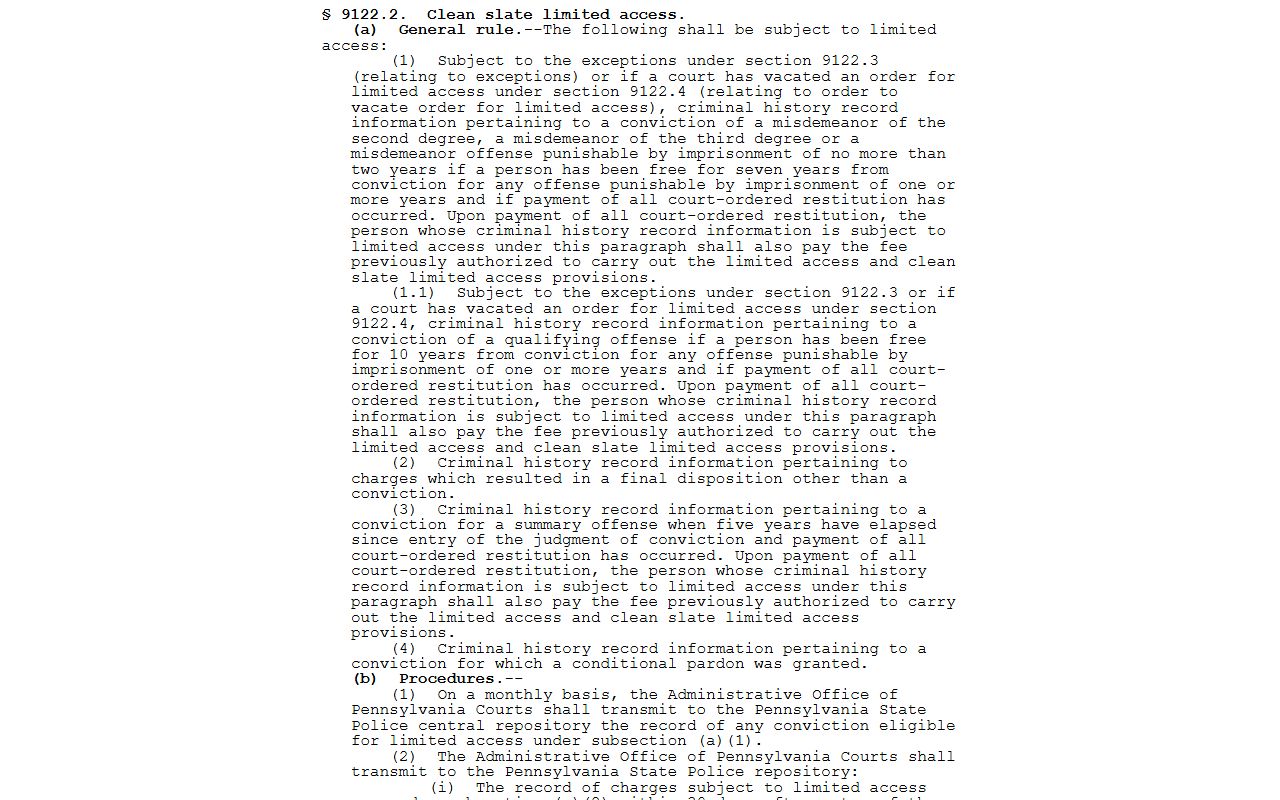
Clean Slate seals public access rather than destroying the file, which is why some older minor records vanish from public searches. A second tool, petition-based limited access, works by court order instead of automatically.
The petition route appears at 18 Pa.C.S. § 9122.1, the statute that lets a court seal eligible records on request.
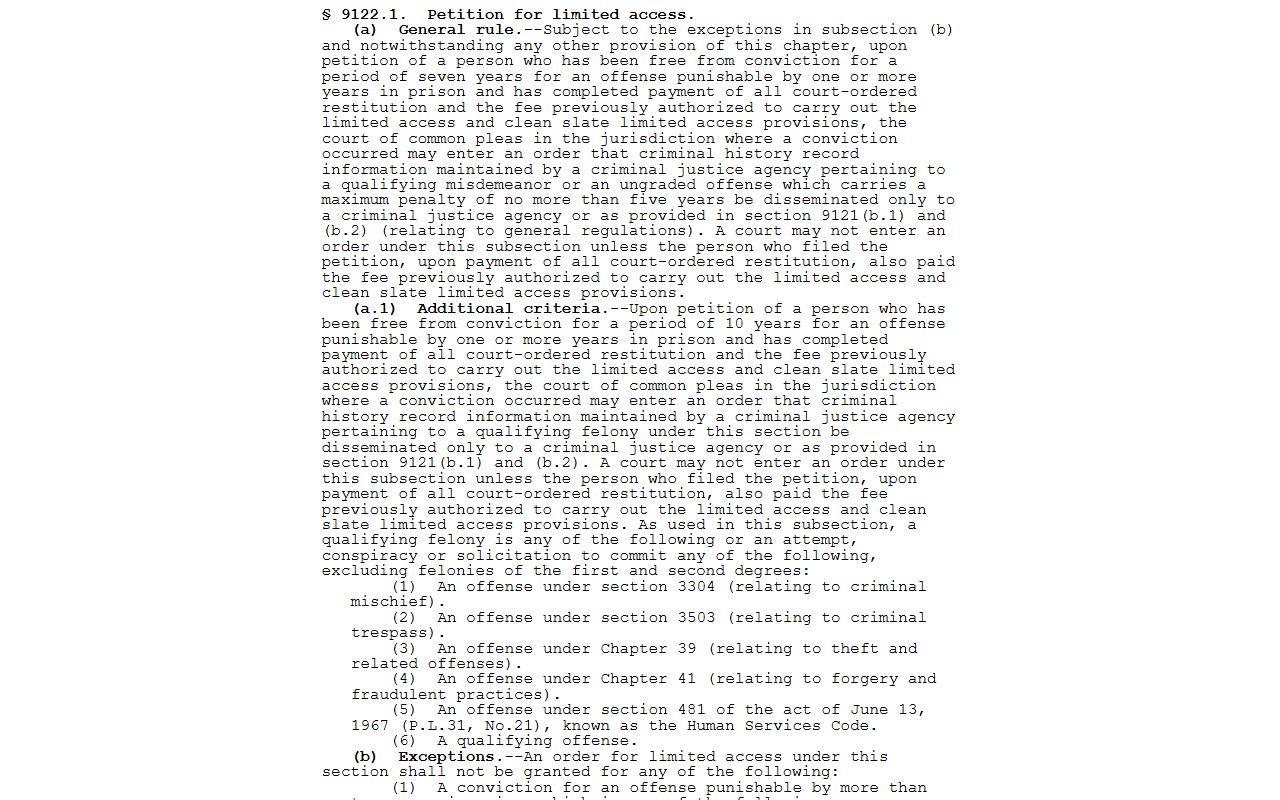
Limited access hides records from the public while keeping them open to courts and police. The same logic that shields these records shields confidential family files in the Orphans' Court, so adoption, dependency, and incapacity matters stay private.
Northampton County Probate Filing Process
Opening an estate follows a set order. The Register of Wills tells you what to bring, but knowing the path ahead of time makes the first visit smoother. The steps below trace a standard probate from the first call to closing the estate.
- Confirm whether a will exists and whether Northampton County is the right venue for the estate.
- Contact the Register of Wills by phone or email to learn the appointment and document requirements.
- File the original will, the death certificate, the petition for probate or letters, the oath, and any consents or inheritance tax forms.
- Pay the probate filing fees and county fees set by the Wills Fee Schedule.
- Receive letters testamentary or letters of administration once the office approves the filing.
- Give notice to heirs and beneficiaries, then inventory assets and handle estate debts and taxes.
- File an account with the Orphans' Court if an audit is needed, resolve any objections, distribute property, and close the estate.
The search and request fields the office uses are short. A decedent name does most of the work, and an estate number gives an exact hit when you have it. The table lists the fields a probate record request relies on.
| Field | What It Shows or Does |
|---|---|
| Decedent name | Primary search key for any probate or estate record. |
| Date of death | Optional but helps separate records with similar names. |
| Estate number | The best exact key when the number is known. |
| Filing year | Useful for the older historical estate files. |
| Requester contact | Required for an office request; the probate email is on file. |
| Copy type | Plain or certified copy; fees vary by type. |
Note: The original will must be filed with the Register of Wills, so do not mail an only copy or hold the original past the time an estate needs to open.
Audit Lists and Estate Accounts
When an estate or trust account goes before the Orphans' Court, the office publishes an audit list. These lists post for decedent estates and trust accounts and give the confirmation hearing date, the courtroom, and the attorney names. If you have an interest in an account, the audit list is how you learn when the court will confirm it.
Estate accounts and distribution records are part of the court's work too. The Orphans' Court audits accounts, approves distributions, and tracks escrow accounts that hold money pending distribution. An audit is the court's check that an estate was handled right before the property goes out to heirs.
Account filings can carry confidential information. When a filing contains protected details, the filer must use the confidential information forms required under the state Case Records Public Access Policy. Those rules keep sensitive data out of the public view while the rest of the record stays open.
Public Access to Northampton County Probate Records
Pennsylvania splits records access into two systems, and probate sits across both. Court case records follow judiciary rules and the Case Records Public Access Policy. Many other county and state agency records fall under the Right-to-Know Law instead. Decedent estate files at the Register of Wills are largely open, while adoption, dependency, and incapacity matters in the Orphans' Court stay confidential. The Office of Open Records oversees the Right-to-Know side and explains how requests and appeals work.
The Right-to-Know framework is worth knowing because it governs the broader county records you might need alongside an estate file. The first image shows the law's overview from the state.
The state explains the statute on the Pennsylvania Right-to-Know Law page, which lays out request rules, fees, and exemptions.
The law sets out who can ask for records and on what timeline. For step-by-step help, the Office of Open Records publishes a citizens' guide, shown next.
The Office of Open Records Citizens' Guide walks requesters through filing a request and appealing a denial.
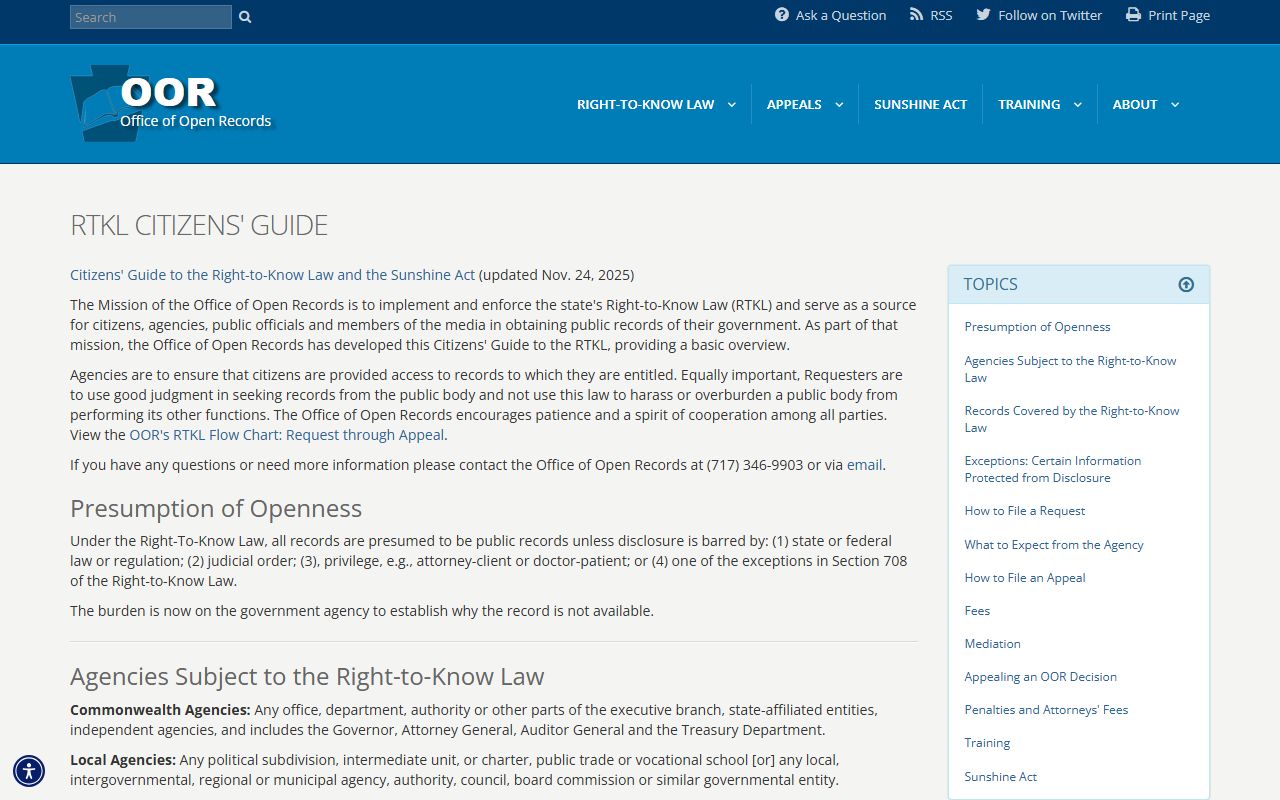
The guide covers fees and the appeal path when an agency says no. For estate files at the Register of Wills, though, the simplest route is a direct request to the office by phone, email, or in person. The county public records page covers the broader request process in more detail.
Fees and Forms for Northampton County Probate
Probate is not free. The Register of Wills charges filing fees that vary by the type of filing and the size of the estate, and the office posts a Wills Fee Schedule with the current amounts. County add-on fees can apply on top of the base filing charge. Certified copies cost more than plain copies, and exact amounts change, so confirm the current rate with the office before you file.
| Item | Fee |
|---|---|
| Will / estate filing | Varies by filing type and estate value; see the Wills Fee Schedule. |
| County Improvement Fee | Added to certain filings per the county schedule. |
| Automation Fee | Added to certain filings per the county schedule. |
| Plain copies | Per-page fee; confirm current rate with the office. |
| Certified copies | Higher than plain copies; confirm with the office. |
Forms come from the statewide system. The Pennsylvania courts and the AOPC forms library hold probate petitions, account forms, and the confidential information forms that some filings need. The Register of Wills can point you to the right form for your filing, and staff will tell you which fees attach to it.
Related estate and family records often sit in other offices. Marriage records and licenses go through this same office, and you can find more on the marriage and divorce records page. Civil and family case filings, including divorce decrees, run through the Prothonotary. For a wider look at how case files work countywide, see the court records page.
Note: The full Wills Fee Schedule lists the exact amounts, so request the current schedule from the office rather than relying on a remembered figure.