
The Right-to-Know Law in Pennsylvania
Pennsylvania opens most government files through the Right-to-Know Law, found at 65 P.S. § 67.101 et seq. The law presumes that records held by a Commonwealth or local agency are public unless an exemption applies. Northampton County agencies fall under this rule for their non-court files. A requester names the records, the agency reviews the request, and the agency must respond within set time limits. If an agency says no, the requester can appeal. The Office of Open Records handles those appeals for many agencies and explains fee limits and request steps.
The law does not cover every file the same way. Some records are exempt by statute, and court case records sit under a different system entirely. The OOR Citizens' Guide walks through how to file a request and how to appeal a denial. It also notes that the law allows civil penalties for bad-faith denials. For the Commonwealth's own agencies, the state keeps a central Right-to-Know hub with request forms and contacts.
Northampton County agency records reached through this law include things like county board minutes, contracts, budgets, and general administrative files. A request must point to specific records, not ask broad open-ended questions. Vague requests can be refused. The clearer the description, the faster the office can find what you want.
The lead-in below opens the Commonwealth Right-to-Know page, which explains how state agencies handle these requests.
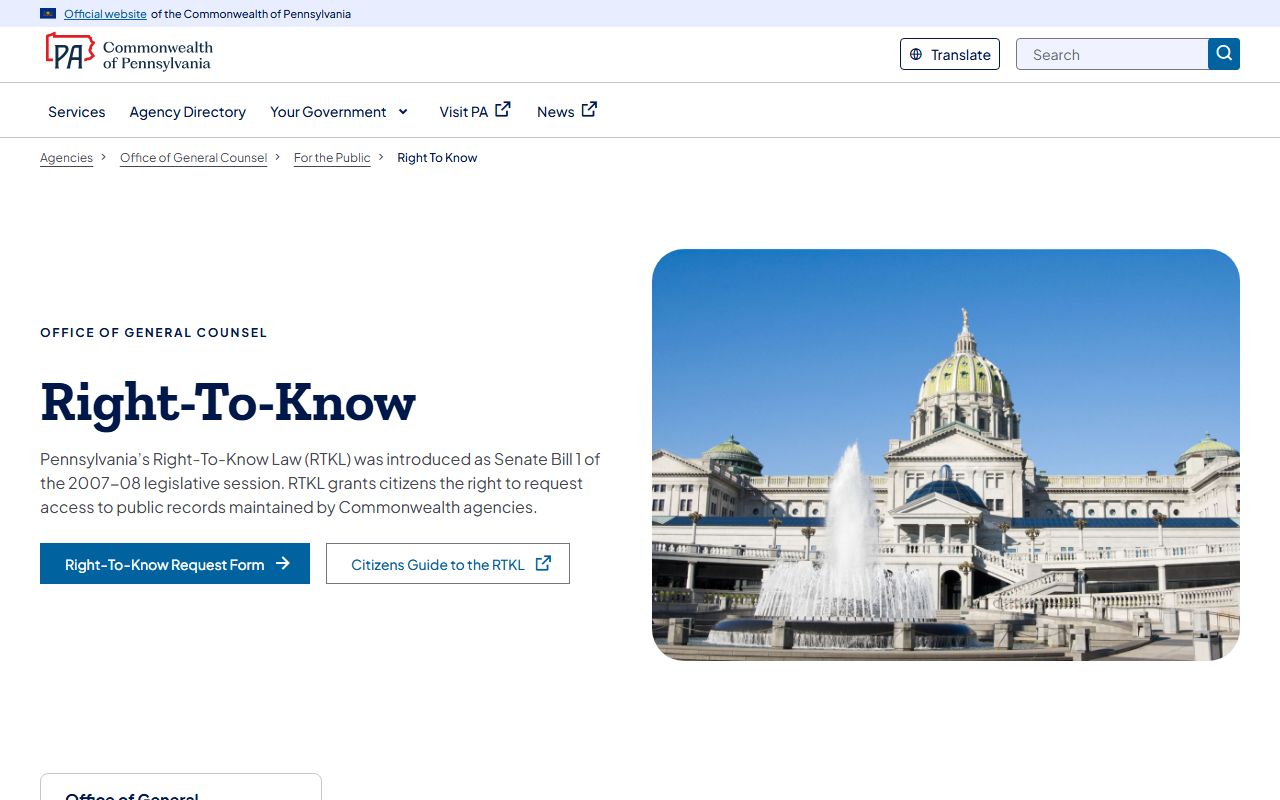
That page shows the request steps and fee rules a Northampton County requester can expect when an agency, rather than a court, holds the file.
Court Records vs Agency Records
Pennsylvania splits public access into two systems, and mixing them up causes most failed requests. Agency records run through the Right-to-Know Law. Court case records run through judiciary rules and the Case Records Public Access Policy. A docket for a criminal or civil case is not a Right-to-Know item. It is a judiciary record, published by the Unified Judicial System under its own policy. So a Right-to-Know request to the county for a court docket would go to the wrong place.
Court dockets are free to read online and need no formal request. Agency files often do need a written Right-to-Know request. The table below sorts common Northampton County records by the system that controls each one.
| Record Type | Governing System | Where to Start |
|---|---|---|
| Criminal or civil court docket | Judiciary public access policy | UJS court case information |
| County agency files (budgets, contracts, minutes) | Right-to-Know Law | County Right-to-Know officer / OOR |
| Police audio or video | Act 22 of 2017 | The law-enforcement agency |
| District Attorney law-enforcement records | DA Right-to-Know track | DA Open Records Officer |
| Official criminal-history check | State Police process | Pennsylvania State Police |
For court files, the PA Courts public records page explains what the judiciary publishes. Full case history and docket help live on the Northampton County court records page.
Note: A request for a court docket sent through the county Right-to-Know process can be denied because courts, not agencies, control those records.
The UJS Public Access Policy
The Unified Judicial System sets its own rules for case records. The Case Records Public Access Policy decides what shows on a public docket and what stays hidden. Under that policy, filers must protect confidential identifiers. Social Security numbers, financial account numbers, birth dates, and minor names are redacted or filed on separate confidential forms. So a public docket may show events and outcomes while keeping sensitive details out of view.
A free UJS docket is useful, but it has a limit you should know. It is not a criminal-history background check. Under 18 Pa.C.S. § 9121, criminal history record information is collected and shared through a controlled process, and only the Pennsylvania State Police can provide an official statewide background check. Employers and licensing boards need that State Police report, not a county docket printout.
There is also an electronic side to the policy. The UJS Electronic Case Record Public Access Policy spells out what case information is open online and what is left off the web. Public access can mean inspecting or getting electronic case records, except where law or policy blocks it. That is why some files appear only after a request to the filing office.
- Docket sheet
- A summary of filings, hearings, orders, and outcomes in a case.
- Confidential information form
- A separate filing that holds protected data kept off the public record.
- Limited access
- A sealing status that blocks public view but keeps records open to courts and police.
- Criminal history record information
- The State Police data set used for official background checks, separate from a court docket.
DA Right-to-Know Requests in Northampton County
The District Attorney runs a separate Right-to-Know track, and it is only for law-enforcement matters. This is not the route for court dockets or general county files. It covers records the DA's office holds in its law-enforcement role. The request must be written. Verbal requests and anonymous requests are not accepted. You must give your name, your address, and a clear description of the records you want, specific enough for the Open Records Officer to find them.
You can submit a DA request through several channels. The county provides an online form, an email box, a fax line, and a mailing address. The contact card below holds the submission details from the DA Right-to-Know page.
ADA Catherine Kollet
669 Washington Street
Easton, PA 18042
Email: daopenrecords@northamptoncounty.org
Fax: 610-559-3035
One more wrinkle applies to police media. Requests for law-enforcement audio or video are governed by Act 22 of 2017, not the ordinary Right-to-Know Law. The Office of Open Records has no jurisdiction over Act 22 requests. That covers body-camera, dash-camera, and similar recordings. Those go to the law-enforcement agency under the Act 22 process, on a different timeline from a standard request.
Confidential and Sealed Northampton County Public Records
Not every record is open. Several categories never show in a public search, even when a case clearly exists. The UJS help pages list these as off-limits on the public portal. Knowing the list saves time, because a sealed record will not appear no matter how you search.
- Juvenile cases - delinquency and dependency matters under the Juvenile Act.
- Sealed and expunged cases - removed or hidden by court order.
- Limited access and Clean Slate cases - sealed from public view but open to police and courts.
- Adoption and parental rights matters - confidential in Orphans' Court.
- Mental health commitments - protected by medical and statutory privacy rules.
Pennsylvania uses two different tools to limit access. Expungement under 18 Pa.C.S. § 9122 can remove eligible records, often non-convictions or some summary offenses after a waiting period. Limited access under 18 Pa.C.S. § 9122.1 seals records from public view but keeps them open to courts and law enforcement. Clean Slate under 18 Pa.C.S. § 9122.2 can apply that sealing automatically once statutory conditions are met. So an older minor case may simply vanish from the public portal even though justice agencies still hold limited information.
Common Pleas civil docket sheets also sit off the public UJS site, though they are not confidential. Those are searched through the county's own civil system instead.
Criminal History Checks vs Court Dockets
A county criminal record search and a docket search are not the same thing, and neither one is a full background check. The Criminal Division of the Court of Common Pleas offers a county criminal record search for a set fee. That search covers local Common Pleas criminal records. It does not reach statewide history the way a State Police report does.
Requests to the Criminal Division go in person or by mail. The office cannot give disposition or sentencing details over the phone. A mail request needs the defendant's name, a date of birth to narrow the search, and payment by business check, certified check, or money order made out to "Criminal Division." For a statewide criminal-history check, you must use the Pennsylvania State Police process, not a county docket.
The form-field table below lists what a Northampton County criminal record search request needs.
| Field | Required | Notes |
|---|---|---|
| Defendant name | Yes | Include on a mail request. |
| Date of birth | Yes, to narrow | Helps separate people with the same name. |
| Case number | Optional | Speeds the search if you know it. |
| Payment | Yes | $10 search fee plus any copy or certification fee. |
| Request method | Yes | In person or by mail; no phone disposition results. |
You can read more about local arrest and charging records on the Northampton County arrest records page, and copy routing for criminal files on the Clerk of Courts page.
How to File a Northampton County Public Records Request
Filing goes smoothly when you match the record to the right system before you write anything. The steps below cover an agency Right-to-Know request, which is the most common public records request for non-court files. For a court docket, you skip this and search the UJS portal instead.
- Decide which system holds the record. Agency files use Right-to-Know; court dockets use the judiciary portal; DA law-enforcement files use the DA track.
- Find the correct Open Records Officer for the agency that keeps the file.
- Write the request. Name yourself, give your address, and describe the records with enough detail to locate them.
- Pick a submission channel. Most offices take a written request by mail, email, fax, or an online form.
- Wait for the agency response within the statutory time limit, and note any fee the office quotes.
- If the request is denied, file an appeal through the Office of Open Records using the Citizens' Guide steps.
For a DA law-enforcement request, the steps shift a bit. The request still must be written and signed, with your name and address, but it routes to the DA Open Records Officer through the online form, email, fax, or mail. Police audio and video follow the Act 22 process and go to the agency that made the recording.
Note: Keep a copy of every request and the date you sent it, since appeal deadlines run from the agency's response or its deadline to respond.
Copy and Search Fees for Northampton County Public Records
Fees depend on the office and the record. Right-to-Know copy charges follow the fee structure that the Office of Open Records sets, which caps per-page rates and limits what an agency can bill. Court copy and certification fees vary by the office that holds the file. The table below gathers the fees confirmed for Northampton County public records requests.
| Item | Fee |
|---|---|
| Right-to-Know copies | Per the Office of Open Records fee structure |
| Common Pleas criminal record search | $10.00 |
| Online payment transaction fee | $2.75 per transaction |
| Certified copies | Vary by office plus copy fees |
Payment rules at the Criminal Division are strict. The office does not take personal checks. It will not take credit card numbers by phone. Do not mail cash. A mail payment must be a business check, certified check, or money order payable to "Criminal Division." In person, you can pay by cash, credit card, money order, or certified check. Online payments through the UJS portal carry the $2.75 transaction fee that the county lists.
Note: Viewing a docket online is free, but official copies, certified copies, and older paper files always route to the filing office and may carry a fee.
Copy Requests by Office
Copies of public records go to whichever office holds the original. Northampton County splits this custody across several offices, so sending a request to the wrong one slows everything down. Civil, divorce, custody, and judgment copies go to the Prothonotary. Common Pleas criminal copies go to the Criminal Division. Estate, guardianship, and marriage copies go to the Register of Wills and Orphans' Court. Magisterial district court paper records come from the specific district office that handled the case.
The routing table below matches a common record need to the right Northampton County office.
| Record Need | Office |
|---|---|
| Divorce decree or civil judgment copy | Prothonotary / Civil Division |
| Common Pleas criminal record copy | Criminal Division |
| Estate, will, or guardianship copy | Register of Wills and Orphans' Court |
| Marriage license or certificate | Register of Wills and Orphans' Court |
| District court paper record | The specific magisterial district office |
For civil filings and certified civil copies, the Northampton County Prothonotary page lays out the process. The Clerk of Courts page covers the criminal side.
Self-Help and Voting Rights
Some public records questions tie into self-help resources and civil rights. The county court site keeps forms and self-help material for filings you can handle on your own. People often ask about voting rights after a criminal case, since that question comes up with public records all the time. In Pennsylvania, voting rights are restored once a person is released from incarceration. There is no extra waiting period tied to parole or probation for that right to return.
You can confirm your registration status and voting details with the state. The link below opens the Pennsylvania voting information site, which lets you check or update a registration.
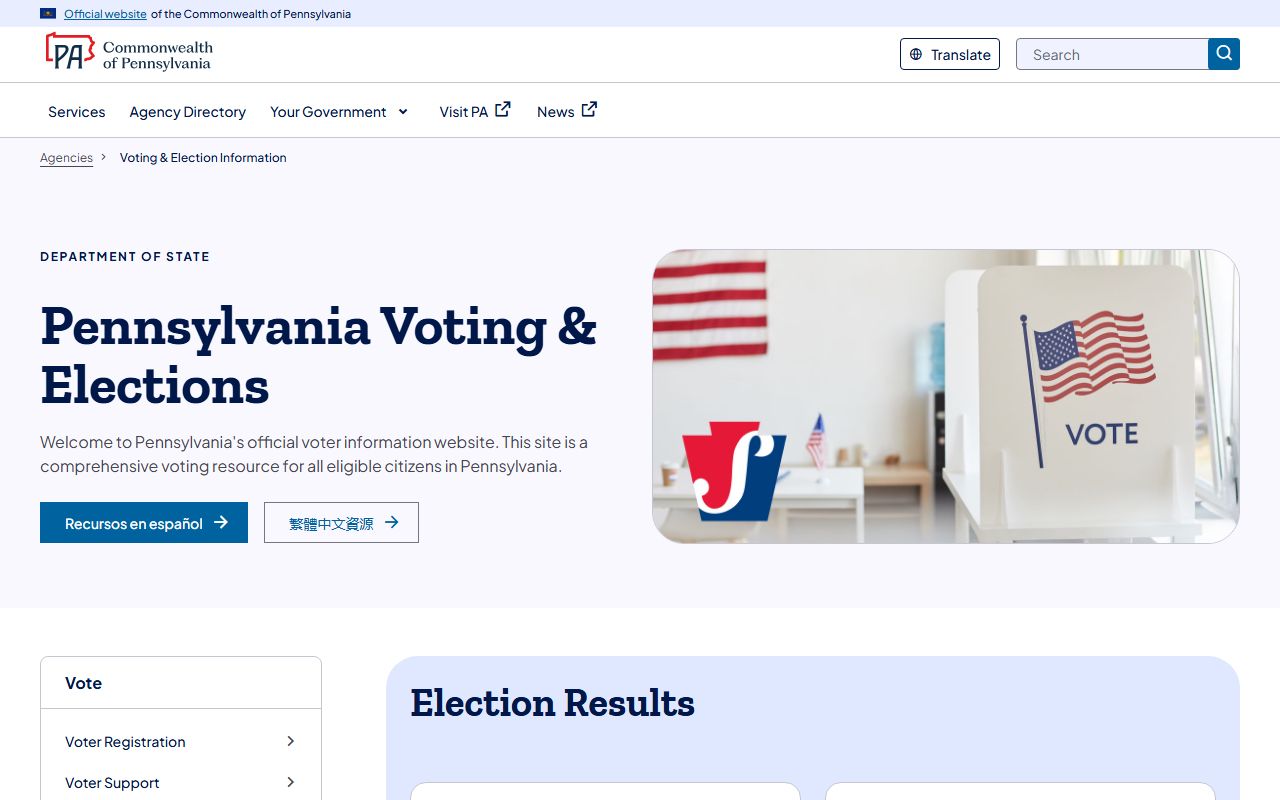
That page helps Northampton County residents verify voting eligibility after release and keep their registration current, which is a common follow-up to a records request.
Note: A docket search shows case events, but it does not decide voting eligibility, which turns on whether a person is currently incarcerated for a felony.